Standard residential fencing is not built for large desert properties, livestock, or Coachella Valley wind. We install farm and ranch fencing with the post depth, bracing, and materials that actually hold up on your land year after year.
Farm and ranch fencing in Palm Desert covers perimeter fencing, interior cross-fencing, equipment yard enclosures, and equestrian barriers using pipe steel, welded wire, or wood rail - most one-to-five-acre installations are completed in one to three days once the permit and scheduling are in place.
In the Coachella Valley, farm and ranch fencing is common on equestrian properties, hobby farms, and large desert lots where standard residential fencing is simply not built for the scale or the animals involved. The materials, post depths, and bracing methods are all different from a backyard fence - and the soil and wind conditions here demand even more from the installation than most other parts of California. If your property also has a pool that needs a compliant barrier, our pool fence installation team can coordinate that work alongside the perimeter project.
Parts of Palm Desert and neighboring communities fall under equestrian zoning overlays where specific fencing styles may be encouraged or required to maintain the character of the neighborhood. We check your zoning designation and HOA requirements before finalizing a design, so you are not reworking approved plans after installation begins.
If you see posts that tilt, rails that have separated from their supports, or sections that visibly lean, the structure has been compromised. In Palm Desert, this often happens after a season of high winds that put repeated stress on posts not set deep enough for desert soil. A leaning post is not just an eyesore - it is a liability if animals can push through it.
Gaps at ground level, bent wire, or sections where animals have pushed through or dug under mean your fence is no longer doing its job. This is especially common on older properties where the original fencing was not designed for the specific animals now on the land. A farm fencing contractor can assess whether repairs will hold or whether replacement makes more sense.
Wood posts in the Coachella Valley take a beating from UV exposure and heat. They can deteriorate from the ground up in ways that are not obvious until you push on them. If a post feels soft, wobbles when you shake it, or shows visible cracking at the soil line, it is losing its structural integrity. Replacing posts before a full section fails is almost always the less expensive path.
If you are bringing horses, goats, or other livestock onto a property for the first time - or developing a raw desert parcel - your existing fencing may not be adequate for the new use. Different animals require different fence heights, wire gauges, and post spacing. A fence that worked fine for one purpose may be entirely wrong for another.
Every farm and ranch fencing project starts with a property walk. We look at the terrain, check for obvious soil challenges like rocky ground or slopes, and ask what animals and uses the fence needs to handle. Posts are set deeper than standard residential minimums throughout the Coachella Valley - sandy, alluvial soil and caliche conditions require it. Corner and end-post bracing is a consistent priority here because the spring winds that funnel through the San Gorgonio Pass put real lateral load on fence lines that are not properly anchored. We also call 811 before any digging begins - this is required by California law and protects your utility lines. Homeowners on properties with smaller enclosure needs that border the perimeter may also want to consider our pet and dog fencing options for interior yard separation.
For properties that need a cost-effective perimeter for large acreage without the livestock demands of pipe steel, our chain link fence installation service is a practical alternative that holds up in desert conditions and covers long fence lines without the per-foot cost of heavier materials.
Best for equestrian properties and large livestock operations - the most durable option for desert conditions, with a lifespan of 30 or more years and minimal ongoing maintenance.
Suits hobby farms and mixed-use properties where affordability and versatility matter - good for containing smaller animals and defining interior pasture divisions.
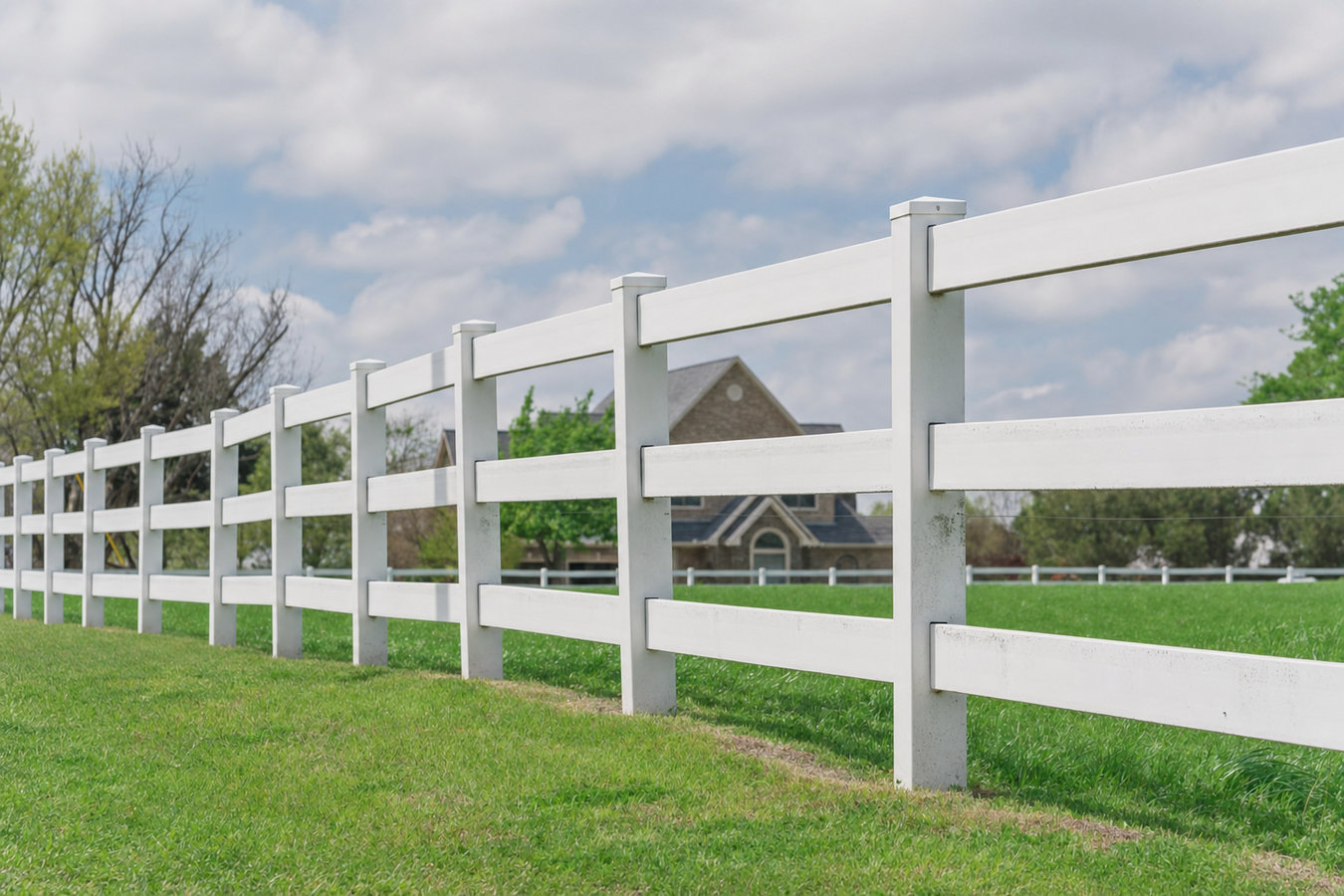
For property owners who want a traditional ranch aesthetic - viable in the desert with proper maintenance, and a good fit for equestrian communities with visual guidelines.
For any entry point on a working property - properly braced, sized for your vehicles and animals, and hung so the gate stays plumb and latches correctly through years of use.
The Coachella Valley presents two installation challenges that contractors from outside the desert do not always anticipate. The first is caliche - the dense, calcium-rich layer in the soil that can feel nearly like concrete when a crew tries to dig post holes. Getting through it requires a hydraulic auger or pneumatic equipment, adds time, and increases cost beyond what national pricing guides suggest. The second is wind. The Coachella Valley is one of the windiest corridors in Southern California, particularly in spring. Fences that are not built with posts set deep enough and corners properly braced can lean, rack, or fail within a few seasons. We account for both conditions on every job, and we discuss them openly during the estimate rather than padding your invoice after the fact. We work on farm and ranch properties throughout Palm Desert and surrounding areas including La Quinta and Indio, where equestrian zoning and large desert lots are common.
HOA rules are also a factor on many Palm Desert properties. A large share of land in this area falls under homeowners association guidelines that specify fence materials, colors, heights, and setbacks - sometimes going further than what the city requires. Getting HOA approval before installation - not after - is essential. We have worked with HOAs throughout the Coachella Valley and know what they typically ask for. The University of California Cooperative Extension publishes agricultural fencing guidance that informs our material and installation recommendations on equestrian and farm properties.
We ask a few basic questions before visiting - acreage, animals if any, what you want the fence to do, and whether you have HOA or permit concerns. This helps us arrive prepared with realistic numbers. You do not need all the answers - just describe what you are working with. We respond within one business day.
We walk your property, look at terrain and soil conditions, check for any zoning overlays, and measure the fence line. You receive a written estimate that clearly breaks out materials, labor, and any permit fees. The number you approve is the number on your final invoice - no after-the-fact add-ons for caliche we hit three inches down.
If your project requires a City of Palm Desert building permit or HOA approval, this step happens before any work begins. We handle the permit application on your behalf. HOA review can take anywhere from a few days to a few weeks depending on your association's schedule, so it is worth starting early if you have a target completion date.
The crew marks utilities via 811, digs post holes through caliche where needed, sets posts in concrete, and works the fence line from end to end. Once complete, we walk the finished fence with you - checking that gates swing and latch properly and that there are no gaps at ground level - before we pack up and leave your property clean.
Free site visit, written itemized quote, no pressure. We handle the permit if one is needed. Call us or fill out the form and we will respond within one business day.
(760) 895-2080We set posts deeper and brace corners more heavily than standard residential work requires because the valley's spring winds put real force on fence lines. A fence that looks solid in October can lean by April if it was not built with local wind patterns in mind. We discuss this during every estimate so you know exactly what you are paying for.
Every experienced contractor in this valley knows caliche is out there. We come equipped for it on every job - hydraulic augers and pneumatic tools, not just a standard post-hole digger. If we hit a difficult layer, we show you what we found and explain how it affects the work before adding anything to the scope.
We check your zoning designation and community guidelines before recommending any materials. Palm Desert's equestrian overlay zones and HOA rules can affect fence height, material, and setback - and finding that out after installation means expensive changes. We get written approval first.
California law requires underground utilities to be marked before any digging begins. We arrange the 811 call as a standard step on every project - protecting your utilities, the crew, and your liability before the first post hole is dug. The American Fence Association's code of ethics, which we follow, includes this as a baseline professional responsibility.
We have worked on properties throughout the Coachella Valley long enough to know what actually makes a farm fence fail in this environment - and we build to avoid those failure points from the start, not after you call us back for repairs.
Secure enclosures for dogs and pets on properties of any size - designed to prevent digging and jumping in desert yard conditions.
Learn MoreA cost-effective perimeter option for large lots where coverage and durability matter more than aesthetics - holds up well in Coachella Valley conditions.
Learn MoreFall and winter are the best seasons to install fencing in the Coachella Valley - call now or request a free estimate before the busy spring season fills our schedule.